Pricing guides · Updated October 2026
How to calculate your profit margin on Etsy
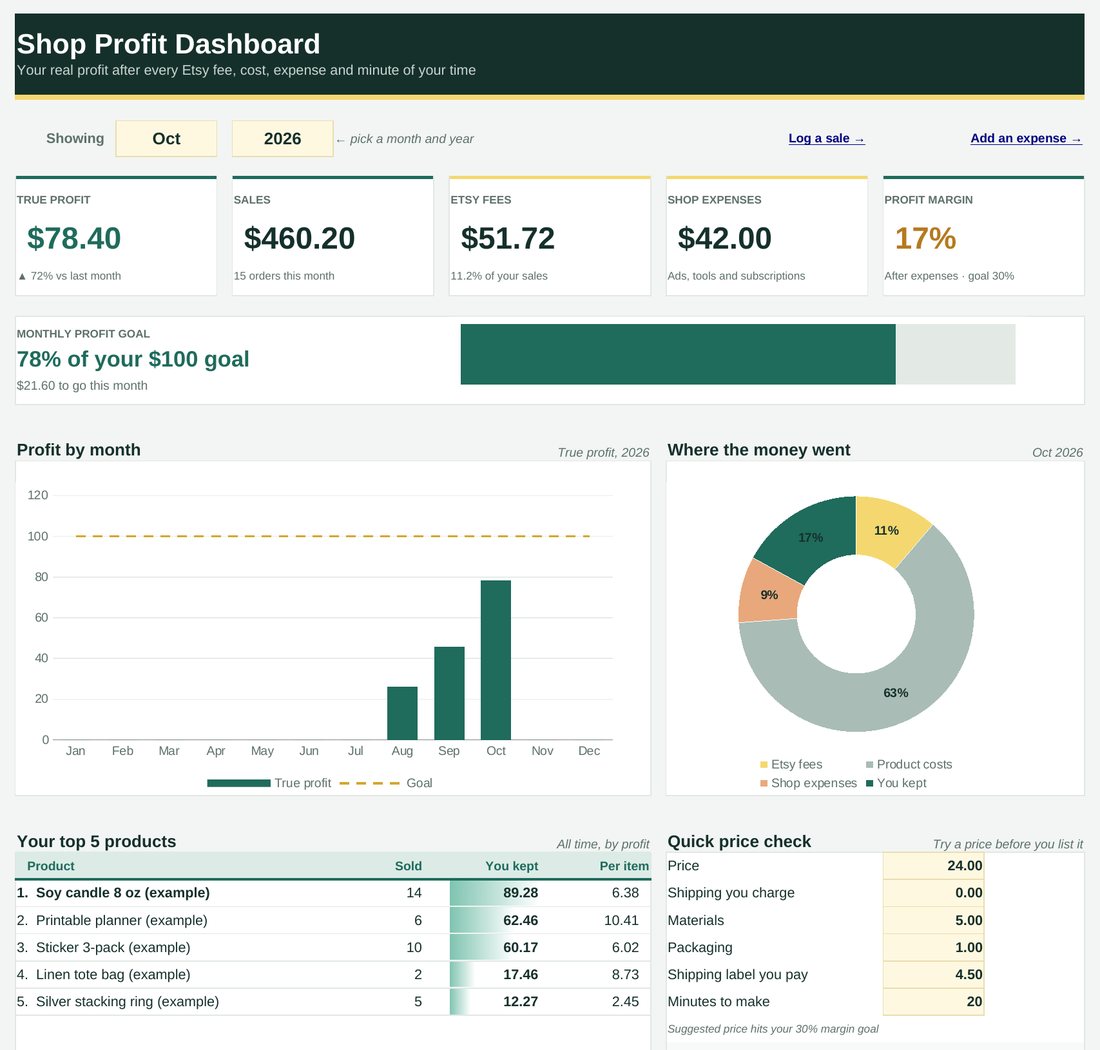
Profit margin is the share of each sale you actually keep. Most sellers overestimate it because they forget fees, packaging or their time.
The formula
Profit = what the buyer pays − Etsy fees − materials − packaging − postage − your time
Profit margin = profit ÷ what the buyer pays
Worked example: a $30 item, free shipping
$30 item
Buyer pays$30.00
Listing fee−$0.20
Transaction 6.5%−$1.95
Processing 3% + $0.25−$1.15
Platform fees−$3.30
Your costs−$23.00
You keep$3.70 (12.3%)
Profit is $3.70, so the margin is $3.70 ÷ $30 = 12.3%. For a 30% margin, the item would need to sell at $38.76.
Margin isn't markup
Markup compares profit with your costs. Margin compares it with the price. Doubling your cost is a 100% markup but only a 50% margin, and that's before Etsy's fees. Always check margin.
What's a healthy margin?
- Under 0%: you're paying to sell.
- 0–20%: thin. One refund or ad sale wipes out several orders.
- 20% and up: healthy, with room for ads, discounts and mistakes.